
At INSTINCT, we believe that great product design isn’t just about building features, it’s about solving the right problems in the right way.
In a recent article we did a spotlight on Harry Pears our Head of Product and Design, followed by one on Rebekah Drummond (check it out here) so we thought we’d build on this with a follow up from Harry himself, talking about his approaches to designing successful products. Sounds easy, but what does designing a successful product mean?
To us it’s about understanding clients deeply, iterating quickly, and constantly validating what works. The most effective product teams don’t guess; they listen, test, refine, and adapt. Here are a few principles that we use at Instinct to guide how we design and deliver our products.
Listening to Clients: The Foundation of Great Design
Good design starts with empathy. It’s not about assuming what users need; it’s about taking the time to listen, observe, and understand their challenges. In asset and wealth management, this often means uncovering pain points hidden in day-to-day operations, or in processes that work “well enough” but still create friction, additional risk or even cost an organisation financially. When we ask clients where they struggle and what slows them down, we often find opportunities to design smarter solutions that sit directly within our wheelhouse. Why it matters to us:
- You build products that solve real, validated problems, not internal assumptions.
- Clients feel heard, strengthening relationships and trust.
By not doing this effectively can lead to “feature bloat”, essentially giving you solutions that look impressive but fail to deliver real value.
Iterating Quickly: Speed With Purpose
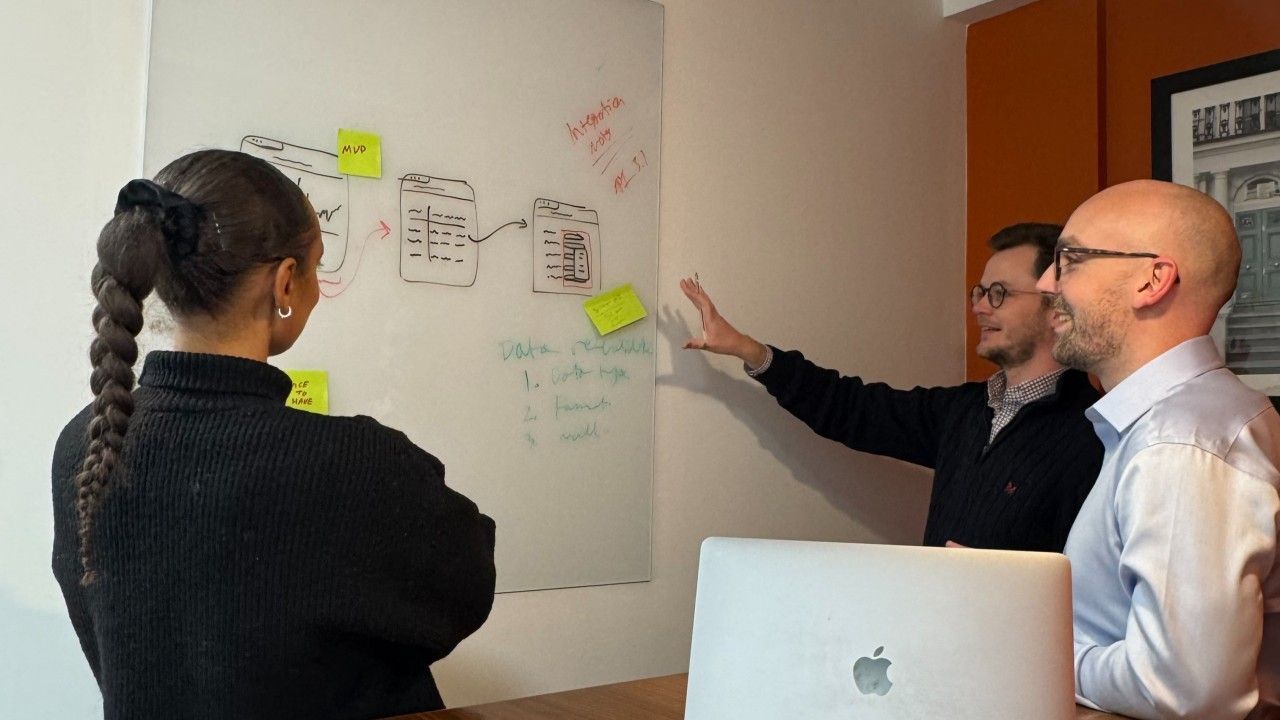
One of the biggest mistakes in product development is waiting too long to get feedback. At Instinct, we use rapid iteration, getting wireframes and prototypes in front of users as early as possible. That means our clients see, click, and react to concepts long before they’re built. Their feedback shapes our understanding of usability, positioning, and design. Why it matters to us:
- Early feedback reduces the risk of investing heavily in the wrong direction.
- Small, continuous iterations are faster (and cheaper) than big course corrections later.
- It builds a “flywheel” of client engagement, meaning users who co-create with you are more invested in the outcome.
We have seen time and time again teams that over engineer before validating often miss what users actually need, you only have to look at those asset managers that have built hyper-custom reporting portals with complex widgets and deep personalisation, only to discover clients mainly wanted faster, clearer quarterly packs and reliable delivery. After months of build and very low usage; the products tend to get stripped back to simple, validated workflows (clean summaries, editable commentary, automated distribution).
In short: quick iteration keeps teams humble and focused.
Using Proof of Concepts: Validate Before You Scale
Before committing resources to full production, we use proof of concepts (POCs) with both existing and potential clients to validate ideas. The goal is speed and learning, getting something functional into users’ hands quickly, gathering insights, then iterating fast. When something works, we convert it into a production quality solution; when it doesn’t, we pivot or park it. Why it matters:
- It provides rapid, evidence-based validation before full investment.
- It builds confidence in both the product team and the client base.
- It sustains momentum by turning innovation into a continuous process, not a one-off project.
Without POCs, ideas can get stuck in endless debate, or money and time can be wasted. POCs replace speculation with proof and create alignment around data, not opinion.
Staying Ahead: Market and Technology Shifts
Designing for the future means never assuming the current model will last. We keep a close eye on market shifts and broader technological advancements, from regulatory changes in asset management to the rapid evolution of AI and automation. That means attending industry events, engaging with peers, and following cross-industry trends. We learn from outside our immediate domain, because innovation often happens at the edges. Why it matters to us:
- You’re able to spot opportunities early, rather than reacting late.
- You ‘future proof’ your roadmap and stay relevant with informed, timely decisions.
Focusing solely on today’s problems risks designing yesterday’s solutions. Continuous awareness ensures long-term relevance.
Competitive Awareness: Know Where You Win
No product exists in isolation. All asset managers have these issues, but they don’t all use Instinct (mores the pity). So understanding what competitors are doing helps define where you lead and where you need to improve. It’s not about imitation; it’s about strategic differentiation. At Instinct, we regularly evaluate the landscape:
- Where do others offer a more complete solution?
- Where do we have an edge, and how do we protect it?
This awareness shapes our priorities — we double down on what makes us different (speed, usability, simplicity) while staying alert to shifts in the competitive space. Why it’s a must for us:
- It helps us invest intelligently, not react emotionally.
- It ensures our platform continues to deliver unique, tangible value to clients.
Ignoring competitors leads to complacency. Obsessing over them leads to distraction. The right balance keeps you grounded and focused.
In Summary
Product design isn’t about one big idea or one visionary moment. It’s about listening, iterating, validating, and improving together. That’s how we approach product development at Instinct. Every prototype, every proof of concept, every conversation helps us build a better, more intuitive platform for the people who use it every day. Because the most successful products aren’t just well-designed they’re co-designed.
If you want to discuss how Instinct can help, or are considering a PoC, please get in touch with us today.